A two-week home emergency supply plan
The American Red Cross suggests keeping two weeks of water and food at home, plus a three-day supply you can carry if you have to leave (American Red Cross, Survival Kit Supplies). Two weeks covers a long power outage, a winter storm or a stretch when stores are hard to reach. Ready.gov points out that an outage can also close grocery stores, gas stations, ATMs and banks (Ready.gov, Power Outages), and home phone service that runs over the internet stops working without backup power (FCC, VoIP and 911 Service).
This plan turns the official guidance into amounts for your household. Start with the calculator, then work through each section.
Two-week supply calculator
Water: Ready.gov's at least one gallon per person per day, and its note that needs can double in very hot weather. Pets: half a gallon per pet per day, from FEMA P-320. Food and medicine: the Red Cross two-week home supply and 7-day medication supply.
Water
Ready.gov's guide is at least one gallon of water per person per day, for drinking and sanitation (Ready.gov, Water). Over two weeks that's 14 gallons per person, or 56 gallons for a family of four. A normally active person needs about three quarters of a gallon of fluid a day. In very hot weather that can double, and children, nursing mothers and sick people may need more. Ready.gov's advice is to drink what you need today and look for more tomorrow, and not to ration unless officials tell you to.
Pets need water too. FEMA P-320 plans for half a gallon a day per pet (FEMA P-320, third edition (copy hosted by the National Weather Service)).
- Sealed, store-bought bottled water is the simplest option. Keep it in a cool, dark place.
- If you fill your own containers, buy food-grade water storage containers. Ready.gov says to clean them with dish soap, sanitize them with one teaspoon of unscented liquid chlorine bleach per quart of water, and replace water that wasn't commercially bottled every six months.
- To treat water of uncertain quality, bring it to a rolling boil for one full minute. Or add 1/8 teaspoon of regular unscented bleach (5.25 to 6 percent sodium hypochlorite) per gallon, stir, and let it stand for 30 minutes. It should smell slightly of bleach.
Food
The Red Cross suggests two weeks of non-perishable, easy-to-prepare food for each person at home (American Red Cross, Survival Kit Supplies). Ready.gov recommends staples that need no refrigeration, cooking or water (Ready.gov, Food), such as:
- ready-to-eat canned meats, fruits and vegetables, plus a manual can opener
- protein or fruit bars
- dry cereal or granola
- peanut butter and dried fruit
- canned juice and shelf-stable pasteurized milk
At three meals a day, two weeks comes to 42 meals per person. Writing out a rough menu and counting cans against it shows gaps quickly, like having no breakfast food or no can opener. Add whatever infants, older relatives or anyone on a special diet will need.
Eat the fresh food first. Ready.gov says a closed refrigerator keeps food cold for about four hours and a full freezer holds its temperature for about 48 hours. Throw out refrigerated food once it reaches 40 degrees or higher (Ready.gov, Power Outages). Twenty-five pounds of dry ice will keep a 10 cubic foot freezer below freezing for three to four days. Charcoal grills and camp stoves are for outdoor use only (Ready.gov, Food).
Power and light
- Have a flashlight for every person in the house, and extra batteries (Ready.gov, Power Outages).
- List everything you rely on that needs electricity, then plan batteries, a portable charger or a power bank for each. Keep chargers and a backup battery for every phone (Ready.gov, Build a Kit).
- If you use a generator, run it outdoors only, at least 20 feet from windows, doors and attached garages (Ready.gov, Power Outages).
- Put carbon monoxide detectors with battery backup on every level of the home. Never heat the house with a gas stove or oven.
Phones, internet and news
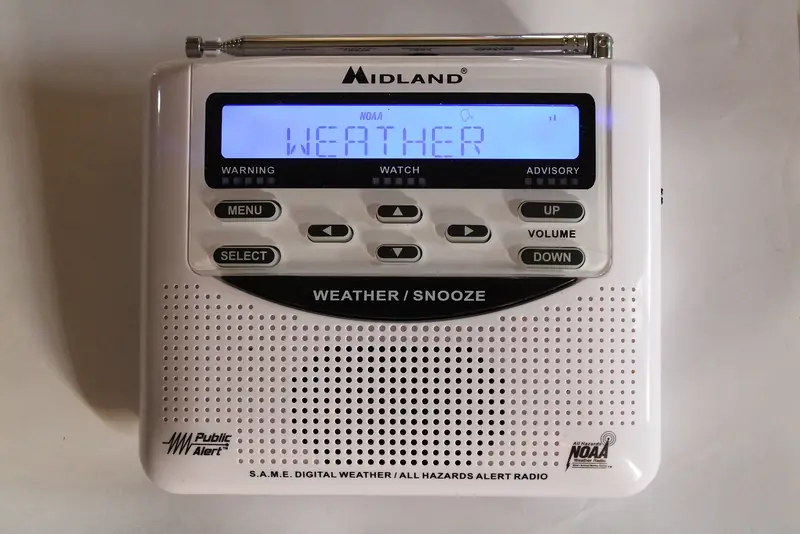
- Keep a battery-powered or hand-crank radio. Ready.gov suggests a NOAA Weather Radio with a tone alert, and the Red Cross also lists a NOAA radio (Ready.gov, Build a Kit; American Red Cross, Survival Kit Supplies).
- Write family and emergency phone numbers on paper. The Red Cross lists family and emergency contact information in its kit (American Red Cross, Survival Kit Supplies).
- When networks are busy, the FCC suggests texting instead of calling, keeping calls short and waiting 10 seconds before redialing (FCC, Tips for Communicating in an Emergency).
- Home phone service that runs over the internet won't work in an outage without battery or other backup power (FCC and FEMA, Emergency Communications Tips; FCC, VoIP and 911 Service).
- Keep paper maps of your area, in case navigation apps go down (Ready.gov, Build a Kit).
- Keep some cash. Card readers and ATMs may not work, and the Red Cross lists extra cash in its kit (American Red Cross, Survival Kit Supplies).
Medicine and medical needs
Ready.gov says about half of all Americans take a prescription medicine every day, and an emergency can make refills hard to get (Ready.gov, Build a Kit). The Red Cross lists a 7-day supply of medications (American Red Cross, Survival Kit Supplies). For a two-week plan, ask your doctor or pharmacist how to keep more on hand.
- If the power is out for more than a day, Ready.gov says to throw out medicine that should be refrigerated unless the label says otherwise, and to call your doctor or pharmacist for a new supply (Ready.gov, Power Outages).
- Talk to your medical provider about a power outage plan for any device that runs on electricity.
- Keep a first aid kit and non-prescription medicine such as pain relievers, anti-diarrhea medicine, antacids and laxatives (Ready.gov, Build a Kit).
- Pack spare glasses, contact lens solution and hearing aid batteries (Ready.gov, Build a Kit; American Red Cross, Survival Kit Supplies).
Sanitation and household items
- moist towelettes, garbage bags and plastic ties
- soap, hand sanitizer and disinfecting wipes
- a wrench or pliers to turn off utilities
- a sleeping bag or warm blanket for each person
- matches in a waterproof container and a fire extinguisher
- a whistle to signal for help
- copies of insurance policies, identification and other key documents in a waterproof container
Sources: Ready.gov, Build a Kit; American Red Cross, Survival Kit Supplies.
Two-week checklist
| Supply | Amount for two weeks | Based on |
|---|---|---|
| Water | 14 gallons per person, plus 7 gallons per pet | Ready.gov; FEMA P-320 |
| Food | 14 days of non-perishable food per person (42 meals) | Red Cross |
| Prescription medicine | At least 7 days, more if your pharmacist can arrange it | Red Cross |
| Light | One flashlight per person, with extra batteries | Ready.gov |
| News | A battery or hand-crank radio, ideally NOAA | Ready.gov; Red Cross |
| Phone power | Chargers and a backup battery for each phone | Ready.gov |
| Cash and papers | Some cash, copies of key documents, contacts on paper | Red Cross |
| Safety | Carbon monoxide detectors with battery backup on every level | Ready.gov |
If you have a storm shelter or safe room, the grid-down readiness guide covers ventilation, batteries and a 72-hour kit to keep inside it.
Common questions
How much water do I need for two weeks?
Ready.gov's guide is at least one gallon per person per day, so two weeks is 14 gallons per person, or 56 gallons for a family of four. Very hot weather can double what people need, and children, nursing mothers and people who are sick may need more.
How much food should I keep for a two-week emergency?
The Red Cross suggests a two-week supply of non-perishable, easy-to-prepare food for each person at home. At three meals a day that's 42 meals per person. Pick foods that need no refrigeration, cooking or water.
How long does food last in the fridge when the power goes out?
Ready.gov says a closed refrigerator keeps food cold for about four hours and a full freezer holds its temperature for about 48 hours. Throw out refrigerated food once it has reached 40 degrees or higher. Keep the doors shut as much as you can.
How do I get news if the internet and cell service are down?
Keep a battery-powered or hand-crank radio, ideally a NOAA Weather Radio. When networks are busy, the FCC suggests texting instead of calling and keeping calls short. Internet-based home phones need backup power to work in an outage.
Is it safe to run a generator during a power outage?
Only outdoors. Ready.gov says generators and fuel should be at least 20 feet from windows, doors and attached garages, and every level of the home should have a carbon monoxide detector with battery backup. Never heat the home with a gas stove or oven.
How much medicine should be in an emergency kit?
The Red Cross lists a 7-day supply of medications. For a two-week plan, ask your doctor or pharmacist how to keep more on hand and how long any refrigerated medicine can go without power.
More reading: underground bunker cost, bunker permit rules by state and all preparedness guides.
This is a general guide built from public sources, not engineering, medical or legal advice. Follow local officials during an emergency.
Last updated